Container gardening requires more attentive watering than garden beds — bottles dry out quickly in sun and wind. But once you understand each plant's needs, a daily 10-minute routine is all it takes to maintain a thriving balcony vegetable garden.
The Golden Rules of Watering
💧 Water the Soil, Not the Leaves
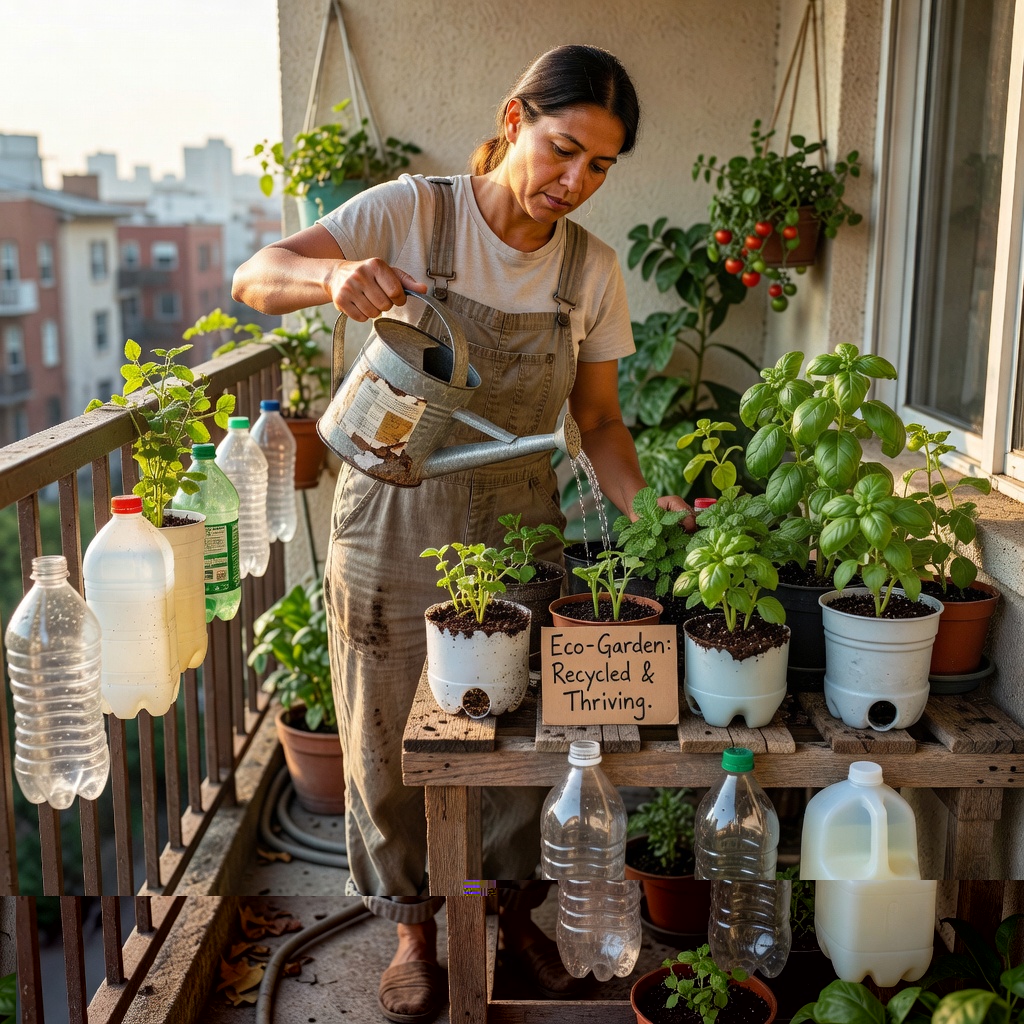
Direct water at the base of the plant, not from above. Wet foliage in humid conditions encourages mould and fungal disease. Use a long-spout watering can for precision.
🌅 Morning is Best
Water early in the morning so any splash on leaves evaporates quickly. Evening watering can leave moisture on leaves overnight, increasing disease risk — especially in summer humidity.
👆 The Finger Test
Before watering, push your finger 2cm into the soil. If it feels moist, skip today. If it feels dry or only barely damp, water thoroughly until water drains from the bottom holes.
🚿 Water Deeply, Less Often
Deep, thorough watering (until it runs from the drainage holes) encourages roots to grow downward. Shallow, frequent splashing keeps roots near the surface and weakens the plant.
☀️ Double in Summer Heat
In Tokyo summers (July–August), bottles can dry out within 12 hours. Check twice daily and consider moving heat-sensitive plants to a shadier spot during peak afternoon sun.
🌧 Reduce After Rain
After significant rain, skip your next watering. Overwatering is the most common cause of root rot in bottle planters — always check soil before watering regardless of the schedule.
Fertilising: Feeding Your Container Plants
Unlike garden soil, potting mix in bottles is a closed system — nutrients get used up or washed out quickly. Regular feeding is essential from about 4 weeks after planting.
Feeding Schedule
Leafy vegetables (spinach, basil, lettuce): Apply balanced liquid fertiliser diluted to half-strength every 2 weeks. Too much nitrogen makes leaves lush but reduces flavour.
Fruiting vegetables (tomatoes, peppers, eggplant): Use a higher-potassium liquid feed (tomato fertiliser) every week once flowers appear. Potassium supports fruit development and improves disease resistance.
Root vegetables (radishes, carrots): Apply a low-nitrogen fertiliser sparingly. Excess nitrogen causes leafy tops and poor root development. Feed once a month at most.
⚠️ Signs of Overfeeding
White crust on soil surface (fertiliser salt buildup), leaf tips turning brown, or wilting despite adequate water can all signal too much fertiliser. Flush the soil with plain water to dilute excess salts and reduce feeding frequency.
Pruning & Training
Bottle planters restrict root space, so managing above-ground growth is important. Keep plants productive by:
- → Removing "suckers" from tomato plants (the side shoots that grow in the joint between stem and branch)
- → Pinching flower buds off basil regularly to keep the plant producing leaves instead of going to seed
- → Staking tomatoes, peppers, and eggplant with bamboo canes tied to the bottle with soft garden twine
- → Harvesting regularly — picking ripe produce encourages the plant to produce more
Seasonal Care Calendar
🌸 Spring (Mar–May)
- Plant seedlings from mid-April
- Begin weekly feeding
- Watch for aphids as temperatures rise
- Refresh potting mix in old planters
☀️ Summer (Jun–Aug)
- Water morning and evening
- Move pots to partial shade in heat
- Harvest daily to keep plants productive
- Watch for spider mites in dry heat
🍂 Autumn (Sep–Nov)
- Sow spinach, radishes, and spring onions
- Reduce watering frequency
- Plant strawberry runners
- Clear finished summer crops
❄️ Winter (Dec–Feb)
- Grow hardy herbs (shiso, mitsuba)
- Water sparingly — once every 3–5 days
- Protect sensitive plants from frost
- Plan next year's layout
💡 Bottle Tip: Check Drainage Daily
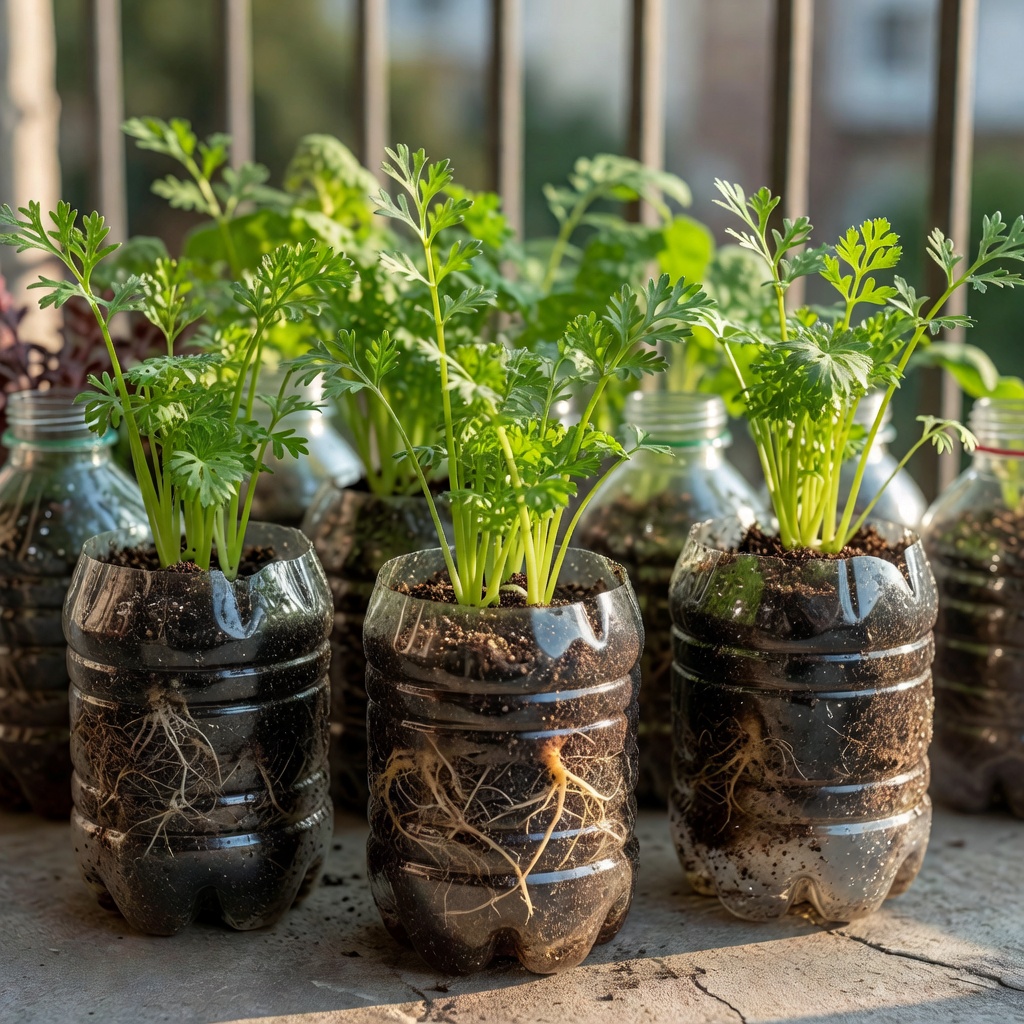
Blocked drainage holes are a silent killer. Inspect the base of each bottle planter weekly and clear any holes clogged with roots or compacted soil using a thin skewer. Healthy drainage keeps roots oxygenated and prevents rot.