Chemical pesticides are not only harmful to the insects you want to protect (bees, butterflies, ladybirds) — they can also contaminate the very food you are trying to grow. Every method in this guide is safe for children, pets, beneficial insects, and the urban ecosystem of your balcony.
The Six Core Methods
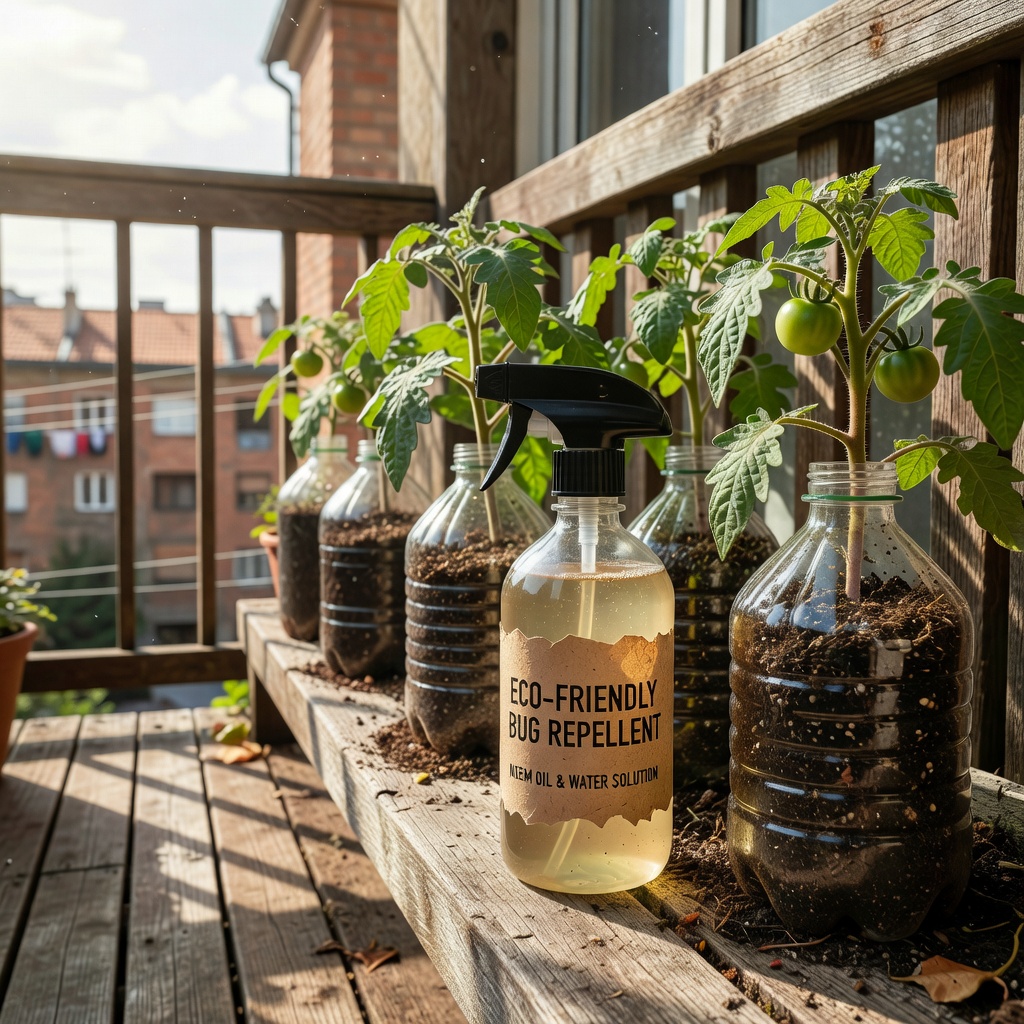
1. Neem Oil Spray
Extracted from the neem tree (Azadirachta indica), neem oil disrupts the life cycle of over 200 insect species without harming birds, earthworms, or mammals. It works as both a repellent and an insect growth regulator.
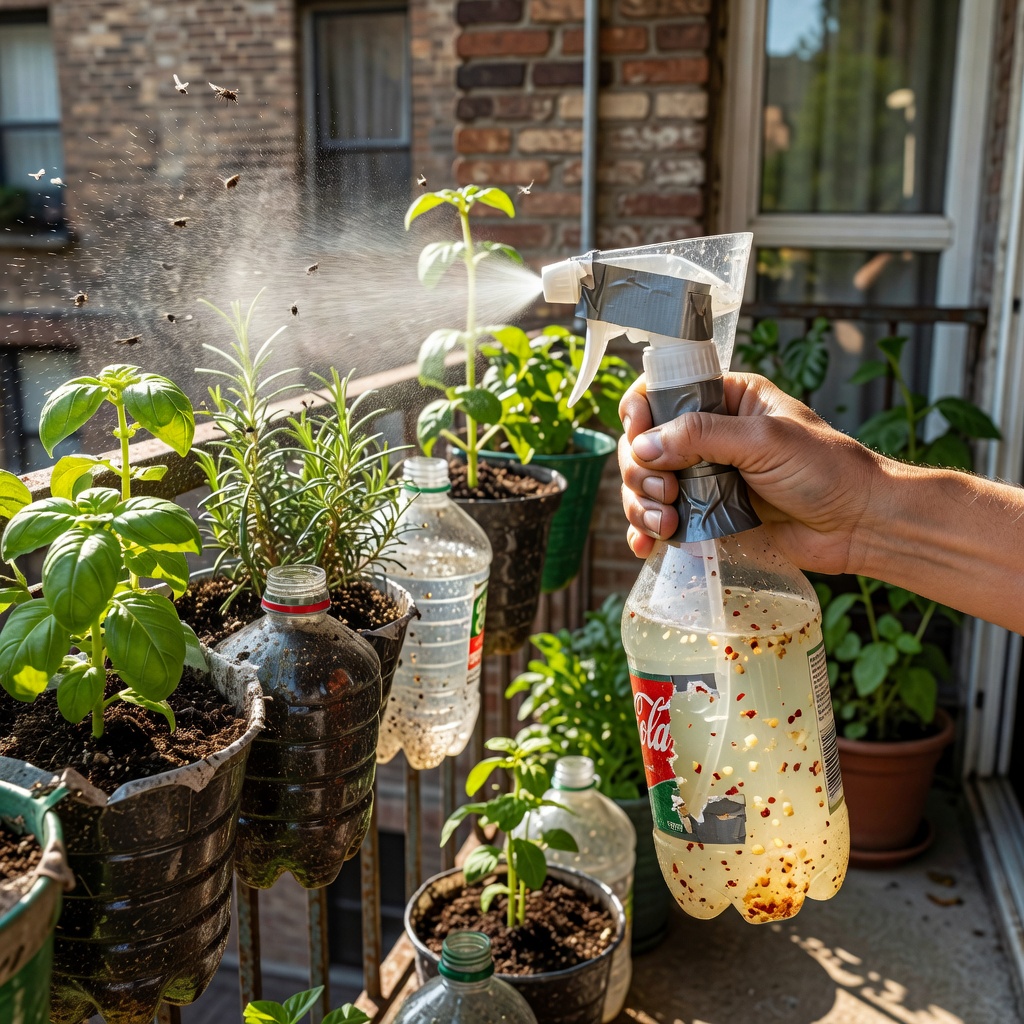
2. Garlic & Chili Spray
This classic DIY repellent uses the strong volatile compounds in garlic (allicin) and chili (capsaicin) to deter aphids, caterpillars, spider mites, and slugs. Safe for all vegetables when diluted correctly.
3. Companion Planting
Growing certain plants together creates a natural pest-repelling ecosystem. This is the most sustainable, zero-effort method once established — and it improves biodiversity on your balcony.
Powerful combinations: Basil next to tomatoes (repels aphids and whiteflies). Marigolds bordering any vegetable (deters nematodes and beetles). Chives near carrots (confuses carrot fly). Mint in a separate pot near the door (repels ants and mosquitoes).
4. Diatomaceous Earth
A naturally occurring powder made from fossilised algae. Completely harmless to humans and animals, but microscopically sharp to insects — it damages the exoskeletons of crawling bugs, causing them to dehydrate.
5. Soap Water Spray
The simplest emergency treatment for aphid infestations. A mild soap solution blocks the breathing pores of soft-bodied insects without any lasting environmental impact.
6. Yellow Sticky Traps
Bright yellow attracts many flying pest insects (whiteflies, fungus gnats, aphid adults, thrips). Non-toxic adhesive traps catch them before they reach your plants. Hang one per 2–3 square metres of garden space.
Replace traps when fully covered (usually every 2–4 weeks). Dispose carefully to prevent birds or beneficial insects from getting trapped. Always position traps at plant-canopy height, not above it.
Common Balcony Pests — Quick Reference
| Pest | Signs | Best Eco Treatment |
|---|---|---|
| Aphids | Clusters of small green/black insects on stems and leaf undersides; sticky residue | Soap spray, neem oil, companion basil or chives |
| Whitefly | White cloud of tiny flies when plant is disturbed; yellowing leaves | Yellow sticky traps, neem oil, companion marigolds |
| Spider Mite | Fine webbing on leaves; yellow speckles; leaves dry out | Strong water spray, garlic spray, increase humidity |
| Fungus Gnat | Tiny black flies around soil surface; larvae damage roots | Let soil dry between watering, yellow sticky traps, diatomaceous earth |
| Caterpillar | Large holes in leaves; visible droppings; visible larvae | Hand-pick, garlic spray, fine mesh netting over plants |
| Ants | Trails to and from plants; often farming aphids | Diatomaceous earth around base, peppermint oil, cinnamon powder |
🐝 Protect Pollinators
Always apply any spray — even organic ones — in the evening when bees are not active. Never spray open flowers. A healthy balcony garden that supports bees and hoverflies will naturally keep pest populations in balance through predation.